Showing posts with label Spinach. Show all posts

Sunday, January 31, 2010

210. Buttered Baby Spinach (p. 578)


It doesn't get much easier than this recipe. Melt some butter, add some baby spinach and toss for a couple of minutes until slightly wilted, bright green, and coated with the melted butter. Add a little salt and pepper to taste, and that's it.

This is exactly what you want from a vegetable side dish. I served this with some Chicken Piccata that I'll blog about soon. It was tender and tasty, not at all soggy or bitter. And the amount of butter was just right. A nice coating without overpowering the spinach.

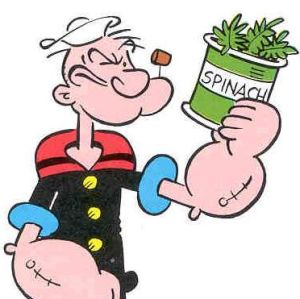
I forgot to take a photo of this dish, so please enjoy this picture of Popeye instead. "I fights to the finish, 'cause I eats me spinach!"

Date Cooked: January 31, 2010
Degree of Difficulty: Very easy
Rating: A-

Friday, January 16, 2009

92. Spinach and Cheese Strata (655)

Every year, my father-in-law cooks a great big beef roast for Christmas dinner ... a Roast Beast, if you will. For my semi-veg wife, this always poses a bit of a problem, which we solve by bringing a vegetarian entree for the buffet table.

In the past, she's made a delicious strata from Cooking Light, and she was in the mood for it again. But since the dessert I chose to make for Christmas wasn't coming from The Book (more on that in a minute), I offered to make this recipe so that I wouldn't let a cooking opportunity pass without ticking a recipe off toward The Project.

Strata is essentially a savory bread pudding, and while it's usually served for brunch (it's in The Book's "Breakfast and Brunch" chapter), it can be substantial enough to be a main course in a vegeterian lunch or dinner. This recipe, in my opinion, is equally at home in either setting.

The recipe is pretty easy to make. It can (and, in fact, probably should) be made ahead of time. First, I cooked some chopped onions in some butter, salt, pepper and nutmeg until they were soft. Then I stirred in some chopped frozen spinach, which had been thawed and squeezed (sqouzen?) to get out the extra moisture. I set that aside for a moment while I spread a layer of bread cubes on a buttered baking dish. I topped the bread with a third of the spinach mixture and some grated Gruyère and Parmigiano-Reggiano. The Book says to "layer" the ingredients in the baking dish. (The name "strata" even suggests layers.) However, while I followed this instruction as best as I could, there were no clearly discernable "layers" in my strata. Instead, the ingredients were, what I would call, "evenly distributed." Then I whisked together some eggs (and by "some," I mean nine!), milk, salt, pepper and Dijon mustard. I poured this over the strata, wrapped it tightly with plastic wrap and put it in the refrigerator for a long winter's nap. On Christmas morning, I baked the strata, wrapped it up in foil and took it to my in-laws' for dinner.

This was a delicious dish. It was savory and flavorful. Spinach and nutmeg are best friends, and the Dijon mustard added some depth to the flavors. It was cheesy and buttery - rich without being overwhelming. Although intended as a vegetarian main course option, I enjoyed it as a side dish with the roast - it kind of reminded me of a Yorkshire Pudding, or at least served a similar purpose.

Now, I'll tell you about the other thing that I made for Christmas, but that I can't get any credit for toward The Project. As I was flipping through The Book looking for something to make for dessert for Christmas, this recipe for tiramisu caught my eye. I told my mother-in-law that I was making it, and she was thrilled (it's a favorite of hers), and I really began to get my heart set on having it for dessert. Well, as the week went on and I kept reading and re-reading the recipe, I became more and more concerned about the uncooked eggs in the recipe. With a pregnant wife, and several small children and some elderly people at Christmas dinner, even a small risk of salmonella poisoning was unacceptable. So, I had two options, either deep-six the tiramisu, or find some alternative to raw eggs. I opted to stay the course and find a work-around. Egg Beaters weren't an option because the recipe calls for both the egg whites and the yolks. For a minute, I was encouraged to read about pasteurized-in-the-shell eggs on the Internets. But after calling every grocery store I could think of and turning up empty, I learned that the distribution of these eggs is very limited due to poor sales. Then I looked into pasteurizing eggs at home. It looked promising, but in the end I chickened out (we're talking about my pregnant wife's health here), and I opted for this egg-free version of tiramisu from Cooking Light instead. It was good, but I'm sure The Book's version was better.

All of this got me to thinking, there are several recipes in The Book that call for raw or undercooked eggs. What's a home cook (who actually cares about the health and well-being of the people he's feeding) to do when faced with a recipe calling for uncooked eggs? I know that the risk of salmonella is low, but it's real enough to give me pause. What do you do? Please share your ideas and suggestions in the comments.

Date Cooked: December 24-25, 2008
Degree of Difficulty: Medium
Rating: A-
Thursday, September 25, 2008

51. Roasted Butternut Squash and Spinach with Toasted Almond Dressing (p. 579)

Well, Fall is here, and for me, that means squash, pumpkins and apples, so expect to see a lot of them over the next few weeks.

The Downtown Manchester Farmer's Market will close soon, but not before the vendors have a chance to offer some great looking butternut squash. This one came from, of all places, Butternut Farm, in Milford, New Hampshire (the farm is named after the tree, though, and not the squash).

This recipe starts with roasting cubed butternut squash. While the squash is in the oven, it's time to make the dressing. Coarsely chopped almonds are cooked in oil over low heat for a while, presumably to toast the almonds and, at the same time, to infuse the oil with almond flavor. If that was the goal, I don't think it was fully achieved. It either needed more heat or more time. The almonds are strained out and reserved, and some lemon juice is whisked into the oil for the dressing. Finally, the squash, almonds and dressing are tossed with raw spinach.

I liked this dish a lot. The squash was excellent. The roasting brought out its caramely sweetness. The cool crispness of the spinach and the crunch of the almonds gave the dish textural interest. The dressing was pretty good, too.

When Teena made this dish, she wasn't a fan of the combination of the lukewarm squash and the raw spinach. This combo didn't bother me at all, but the next day, I had some leftovers and I threw the whole thing in the microwave, and I thought that it was much better hot with the spinach cooked.

Date Cooked: September 13, 2008
Degree of Difficulty: Medium
Rating: A-

Wednesday, August 6, 2008

35. Peas with Spinach and Shallots (p. 555)

I just love this picture. You can actually see the steam rising off the dish. And if you try really hard, you might even be able to smell the buttery shallot-and-garlic-scented aroma. (Ouch! I think I just hurt my arm patting myself on the back.) But seriously, folks, this was one tasty side dish.


I've always been a fan of peas. Frozen ones, that is. (Don't get me started on canned peas. Yeah, sure, they come in a spiffy silver can and have a fancy French-sounding name. But none of that changes the fact that they're mushy and have that dingy-looking army-green color.) And while I used to think that frozen peas were low-brow, I've recently been gratified to learn that many of the pea recipes in The Book allow for frozen peas as a substitute for fresh, and in some cases, even call for them specifically. And while it seems like the "foodie" thing to do to use only fresh peas, let's face it, sometimes there just not that good. They can be hard, dry and mealy. So, for me, it's frozen peas.


Now, I like peas on their own just fine, but this recipe was just the thing to take them to the next level. And it couldn't be easier to make. Start by melting one tablespoon of butter in a 12-inch skillet. (Kudos to the folks at Gourmet for using a sensible amount of butter in this recipe. It's easy for recipe writers to go all "Paula Deen," and put a whole stick of butter in every dish just 'cause. But here, the one tablespoon of butter was just enough to give the dish a pleasant buttery flavor without making it too rich or seem like the peas were floating in butter.) Quickly cook some sliced garlic and shallots. (Or "charlottes" as the cashier at Stop-and-Shop called them. That's another point for me in "Stump The Cashier.") Throw in the frozen peas and a little bit of water, cover and cook for a few minutes. Then stir in the baby spinach until just wilted. That's it.

For some reason, I felt compelled to follow this recipe precisely as it was written. The recipe calls for 10 ounces of frozen peas and 5 ounces of baby spinach. I bought a 16 ounce package of peas and a 6 ounce package of spinach and carefully weighed out the required amounts and packed away the rest. No need to be so persnickety here. The next time I make this, and I will make it again, I'll just throw in the whole package of peas and spinach.

Date Cooked: August 3, 2008
Degree of Difficulty: Easy
Rating: A